







PRELUDE: ALLIES |
 Since
the Allied Forces landing in Normandy the advance of the front was much faster than
expected and in August 1944 a frontline was established at the France-German and
Belgium-Dutch borders. Since
the Allied Forces landing in Normandy the advance of the front was much faster than
expected and in August 1944 a frontline was established at the France-German and
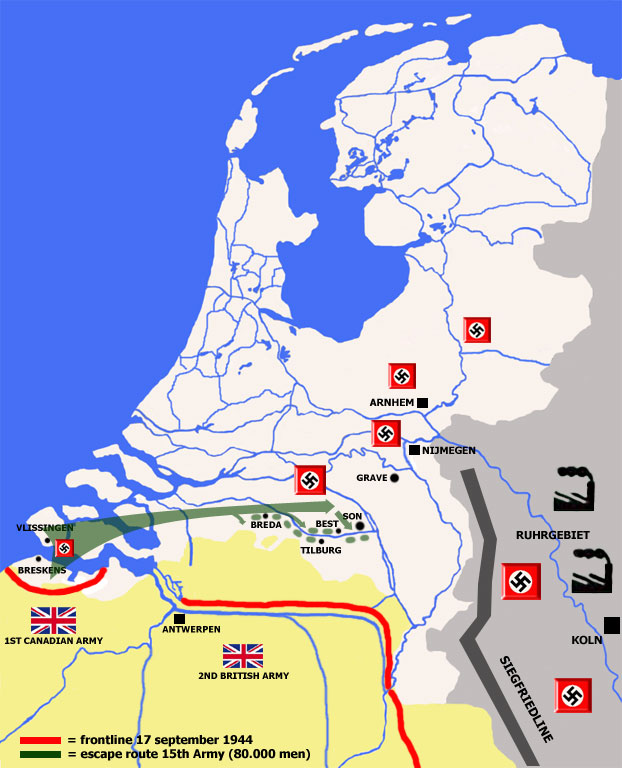
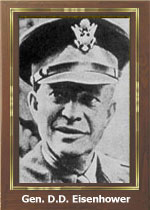
Belgium-Dutch borders. The intent of the landing (Operation Overlord) from the Supreme Allied Commander of the Allied Forces Europe, 'General Eisenhower', was to trusts forward a front as wide as possible to force the Germans back to their own homeland. Because of the high rate of speed of the advancing Allied Army, the situation in August 1944 was different then was planned. Enormous logistical problems started to develop to supply a fast fighting and advancing army, Eisenhower observed the same problems that Hitler had during his Blitz-march into Russia (Moscow). The Allied Forces were progressing faster then the supplies could be delivered. Because of the fanatical commanders and quick advance, some of the Army Groups found themselves in positions other then original planned and this was also creating opportunities. Once the advance slowly came to halt, Eisenhower had a difficult choice. Isolated German units were dug in around important harbours in France and Belgium and gave heavy opposition with good success. However the Allied Forces took one harbour, if not the most important one, without any problems. The harbour of Antwerp! Because of the quick retreat the Germans didn't have time to destroy the harbour installations. Most all docks and infrastructure were in working order. Only one thing prevented the use of the harbour, and that was the 15th German Army under command of Von Zangen occupied the North and South side of the waterway to Antwerp (Westerschelde) and shipping was impossible. Eisenhower had to take a number of difficult decisions. |
THE ALLIED ARMIES AND IT'S COMMANDERS |
The important Armies and
their Commanders on the front line of the German and Dutch borders were: Now that situation was changed due to the rapid advance, Eisenhower stood isolated in his opinion about a wide frontal attack. Patton and Monty were of the opinion that a swift spearhead in a small area would have better results. Other commanders supported them in this. Now followed a discussion between Eisenhower and his Generals about the strategy to follow. Patton wanted one thing, spearhead to the town of Metz and its industrial area of the Saar. Monty wanted via The Netherlands to spearhead into the industrial area of the Ruhr. Both plans had its credits and if it weren't for the supplies he (Ike) wouldn't have to choose. Eisenhower knew there was only one priority at the moment, he needed a harbour close to the front, and Antwerp was the only harbour in allied hands. And so Eisenhower gave the order to the already stagnant march to take a break, temporarily stop and make Antwerp harbour operational and from there re-evaluate the situation.
Eisenhower was for sometime now pondering on how to find a way to involve the airborne into this war. It was because of the harbour of Antwerp that Monty's troop had the priority in the supplies. Monty's last pitch to Ike is to persuade him, and activate the First Airborne Division in his plan MARKET GARDEN and because the German Army resistance was growing, Eisenhower had a change of mind and gives Monty the green light for his plan on one condition; that it had to be real fast and quick. And so completed the decision to go ahead with the Operation Market Garden and the results of this action are of the utmost importance. Patton was raving mad and blew a gasket, however he couldn't change anything to the situation. The First Airborne Division is eager to jump into action, because during operation Overlord time after time the drop zones (DZ) were over run by their own ground units before they could even set foot on the ground. |
THE MISTAKE |
The British forces neglected to advance another 30km (20 miles) and prevent the escape of 80.000 German soldiers. While a small contingent stays behind and defends the harbour of Breskens, the whole army escapes via the islands of Zeeland to take position in the surroundings of the Willems Kanaal in the line of Breda-Tilburg -Best. The movement of the 15th Army was one of the first orders issued by Field Marshall Von Rundstedt when he was back in command. He had allready seen the risk that Von Zangen's Army would be surrounded and cut off by the advancing Allied forces. This causes grave delays for the troops of the Operation Market Garden. A delay that will have great consequences for the operation.
|
PRELUDE: AXIS |
 The most successful
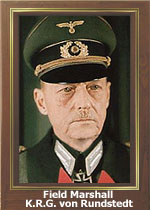
and decorated Germany Army Officer is without a doubt Field-Marshall ' Karl Rudolf
Gerd Von Rundstedt'. He is the 'Oberbefehlshaber West' (OBW) when the Allied
Forces are landing in Normandy. The most successful
and decorated Germany Army Officer is without a doubt Field-Marshall ' Karl Rudolf
Gerd Von Rundstedt'. He is the 'Oberbefehlshaber West' (OBW) when the Allied
Forces are landing in Normandy.When the Germans in France on all fronts are retreating or being destroyed, the OBW on the 2 July 1944 receives a phone-call from Hitler's Chief-of-Staff 'Wilhelm Keitel' who asked Von Rundstedt what they should do? Von Rundstedt snaps back with the answer 'End this war, idiots!' When Hitler hears about the answer, he fires Von Rundstedt as OBW and announces that "the old man" probably can't handle his duties anymore. Von Rundstedt is infuriated. Because of this and his handling the invasion of Normandy, when he was severely restricted by the interference of Hitler himself (he would have followed a totally different strategy). Von Rundstedt is replaced by Field-marshal Gunther Von Kluge. A short time later an assassination attempt on Hitler's life is attempted, and because Von Kluge is involved with this he is called to appear in Hitler's headquarters. Von Kluge understands the reasons and commits suicide on the way to the Fuhrer. Von Kluge is then replaced by Field-marshal Walter Model who is not only OBW now but also Army-leader of Army-Group B. An almost impossible task. When in September the situation is further deteriorated Von Rundstedt is summonsed by Hitler. Hitler wanted personally to testify the opinion of Karl (VR). Hitler sees that the pure frontline commander Model is not fitting as OBW and puts Von Rundstedt back in this function. In two months time, Von Rundstedt is the 4th OBW and is back at his old post. Von Rundstedt is a model officer. Even though there are the futile plans of Hitler, Von Rundstedt goes directly in action and takes a number of crucial decisions, and Model can now give undivided attention to his 'Army-Group B'. The military genius Von Rundstedt is; he estimates the situation immediately and accurately. He notices the unusual stagnation of Monty's troops and concludes from this, that there is an offensive developing. In conclusion he anticipates and executes a number of important orders, including the following; The 15th Army under Von Zangen has to attempt to escape the threatening cut off by Allied Forces. Later this decision is of crucial importance in the execution of Operation Market Garden. |
THE AXIS ARMIES AND IT'S COMMANDERS |
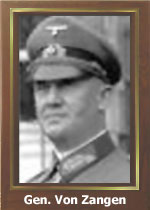 The most important armies and its
commanders on the German-Dutch borders were now; The most important armies and its
commanders on the German-Dutch borders were now;Frontline: Belgium- Dutch border; Army-Group B (Model) consisting of: 15th Army: (General Von Zangen) and 7th Army: (Model ), Fallschirmjager Armee (General K. Student) Frontline: German - French border: Army-Group G (General Blaskowitz) (very limited strength) Now that Model is released from his position as OBW can he concentrate on the things he is most suited for: the leadership of an Army on the front-line. Model isn't the type for paperwork and meetings; he loves the action of the field. Still he is standing for an almost impossible task, to set up a defense with a left over and rag-tag army. On top of this he hasn't got any dependable armored protection in his arsenal to call on. |
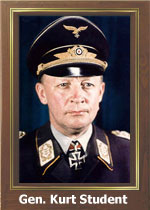 His first orders are important in the running interference with Operation Market Garden. He orders Bittrich to take his 2nd armored corps and gradually retreat from the battles in France and settle in still tranquil country side of The Netherlands, to recuperate and be re-supplied with personnel and equipment. The 1st Airborne Army of Student is added to the Army-Group B and settles in the line of Breda - Tilburg - Best. Through this new (yet weak) defense-line the escaping and retreating troops from all units of the defeating Germany Army are added. Student, the commander of the 1st Airborne Army takes direct action and let most of his experience troops travel from Germany to the line. On top of this the escaping 15th Army arrives along this line and slowly a strong defense is built along the canals in the south of the Netherlands. When in September the first armored vehicles of the 2nd SS Pantzerkorps arrive in the Netherlands, we can talk of considerable troop concentration. It has to be said that all sections were undermanned and was less then a fraction of the original strength. There was however a large amount of anti-aircraft guns and field artillery. The opposition against the Allied Forces was growing day by day... |
THE MISTAKE |
| When the Germans are driven from
Antwerp they are neglecting to destroy, for the Allied Forces so important harbor
installations. Also the other infrastructure is completely intact. Bridges are mined but
not ruined. Is the optimist Model in the understanding that a counter-offensive is a possibility? Even when on the first day the complete orders of Operation Market Garden are in his hands, he distrust these and neglects to inform his superiors. |
|
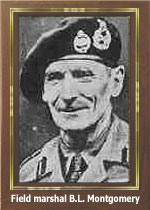 Even during WW II politics played a big role. Because Field-marshal Montgomery
had the most experience in battles, he received from Eisenhower the command for Operation
Overlord and its following battles. Public opinion in the United States in August 1944
started to make waves, because General Bradley was still under command of Montgomery,
Eisenhower was ordered by the Chief of Staff General Marshall to take direct command of
all ground-troops. This changed the order of command and all United State troops were
under direct command of Eisenhower and of the Commander in Chief (President of the United
States) and not under Montgomery.
Even during WW II politics played a big role. Because Field-marshal Montgomery
had the most experience in battles, he received from Eisenhower the command for Operation
Overlord and its following battles. Public opinion in the United States in August 1944
started to make waves, because General Bradley was still under command of Montgomery,
Eisenhower was ordered by the Chief of Staff General Marshall to take direct command of
all ground-troops. This changed the order of command and all United State troops were
under direct command of Eisenhower and of the Commander in Chief (President of the United
States) and not under Montgomery. 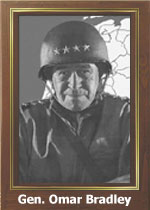 This was against the wishes of Montgomery; Monty was
convinced that with the supplies of Patton's 3rd Army he could advance quickly. Monty
continues his request, which ended up with confrontations between his boss, Eisenhower,
and him. (An important factor for the British to continue the attack into Holland is the
numerous V2 launch-sites in Holland doing great damage to Britain). The key for the
discision taken in these discicive days are the only resources the Allied Forces had in
their arsenal, the First Allied Airborne Army under the command of the U.S. Lt-General
Brereton.
This was against the wishes of Montgomery; Monty was
convinced that with the supplies of Patton's 3rd Army he could advance quickly. Monty
continues his request, which ended up with confrontations between his boss, Eisenhower,
and him. (An important factor for the British to continue the attack into Holland is the
numerous V2 launch-sites in Holland doing great damage to Britain). The key for the
discision taken in these discicive days are the only resources the Allied Forces had in
their arsenal, the First Allied Airborne Army under the command of the U.S. Lt-General
Brereton.